Showing posts with label Wild Edible. Show all posts

Sunday, 12 June 2016

Ocean Sea Beet with Parmesan Cheese and Greens

Ocean Sea Beet with Parmesan Cheese and Greens

While I was on my holiday enjoying the delight of foraging outside my familiar neighborhood I was amazed at what I could find in this part of out little Island. I'd been to Devon and I found some amazing edibles on the beach. While I was taking a stroll along the beach and thinking about the world... as you do I came across a great find of greens. As usual I had my pocket guide of wild edibles with me and my camera and a few paper bags. The weather was lovely and I was somewhere else with my thoughts. I had my toes in the sea water and I found a tiny little beach all to myself. Oh to have your own bit of beach to yourself is a wonder in-itself...no dogs, no people just me and the ocean...ah such a delight.

© L.Moore. Fig.1. Collected Sea Beet
I was listening to the water and looking around and breathing in the sea air and doing a bit of breathing exercises (breath in for 6 breath out for 8 etc). I felt the salty air up my nostrils and I was so chilled. I laid on a rock and just wandered off into complete calm. After a while I continued on my walk and came across a whole load of sea beet..oh yes there it was green, shiny and welcoming...what a prized find yay.

So I bagged a handful and scurried on up to the rented holiday home and did my research. Bingo! yes indeed it was sea beet..Ta Dah to another amazing day. The texture of this lovely leaf is thick and rubbery and you would imagine it tasted rather tough. On the contrary it's amazing.
© L.Moore. Fig 2. Collect your Sea Beet 
© L.Moore. Fig 3. Sea Beet by the sea
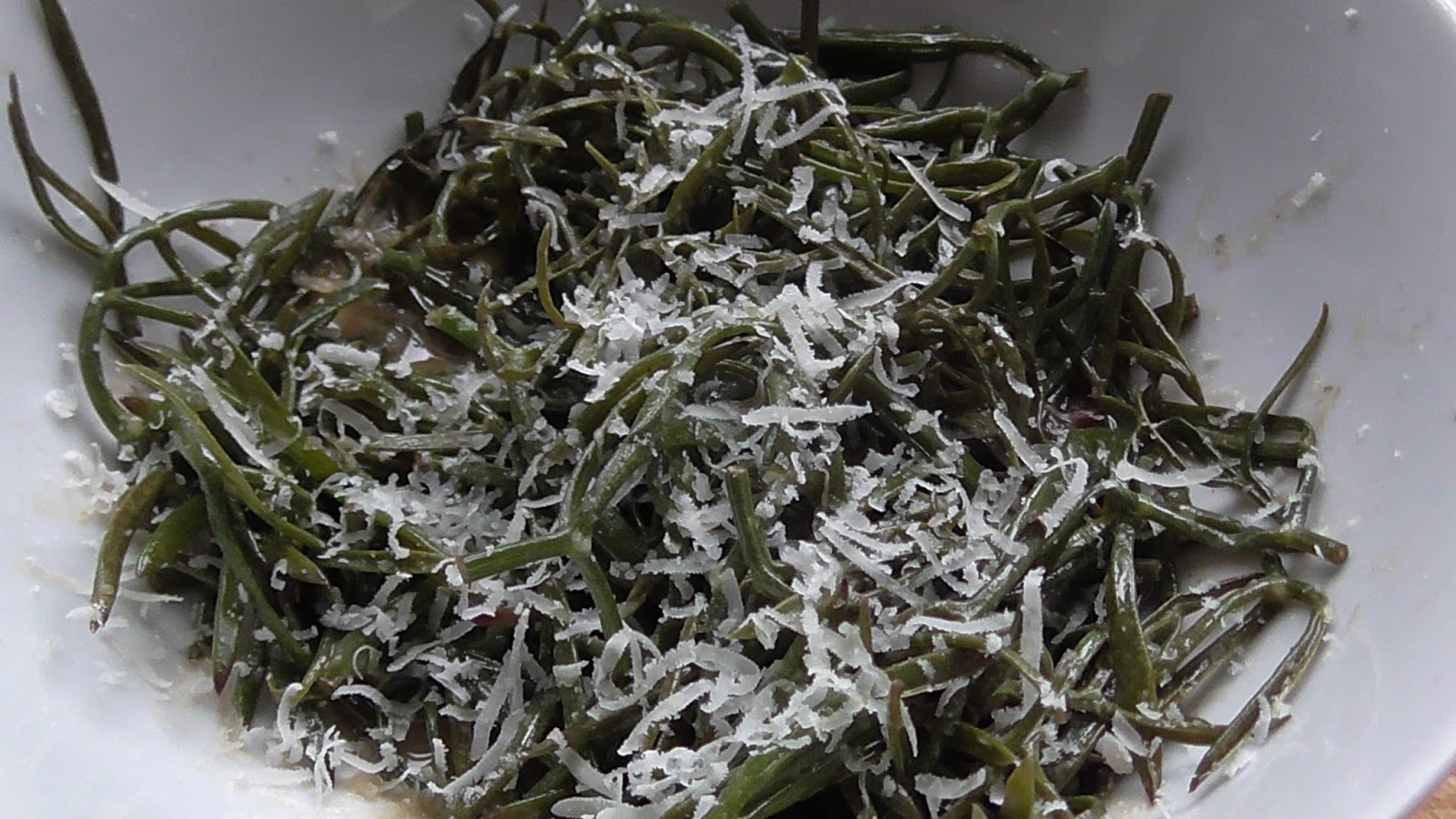
© L.Moore. Fig 4 Sea Beet with parmesan cheese and greens
© L.Moore. Fig 5. Empty dish speaks volumes (first cooked on holiday)
© L.Moore. Fig 6. Collect your Sea Beet (responsibly) on cliff side


Ingredients
4/5 handfuls of sea beet (treat as spinach i.e a lot gives you a little)
1 green pepper
2 tbs cream cheese
4 cloves of garlic
1 lemon
Parmesan cheese for grating on top
Butter for frying (or an oil of your choice i.e olive oil/coconut etc.)

Wash you sea beet and pat dry. In a frying pan melt your butter and gently fry your garlic. Add your sea beet and pepper and fry for about 10 minutes until sea beet is soft. Add your cream cheese and lemon juice and stir. In a warm ovenproof dish add your sea beet and grate on top with parmesan. Place under the grill for a minute and serve. Ta Dah... delicious.

Get out looking for this incredible edible...I promise you won't be disappointed.

As usual my disclaimer is that 'it is not my responsibility if you don't pick the right edible'. Please be 100% certain it is what it should be. If in doubt leave it out. Some of my posts will give you source material to do your research and point you in some interesting directions and some do not. It all depends how much time I have when I am writing.

But please enjoy! It is great fun.


Monday, 30 May 2016

Lemon Rock Samphire with parmesan cheese

Lemon Rock Samphire with Parmesan Cheese


Well what can I say about this crazy abundant edible?

It's Absolutely marvelous


© L.Moore Fig 1. Lemon Rock Samphire with Parmesan
© L.Moore. Fig.2 Rock Samphire Just collected from rock face
© L.Moore. Fig.3. Rock Samphire on cliff face
© L.Moore. Fig.4. Rock Samphire in context on rock face
© L.Moore. Fig 5. Lemon Rock Samphire with Cheese
© L.Moore. Fig 6. Empty dish speaks volumes (my first trial of samphire cooked on holiday) 
© L.Moore fig. 7. At home with salmon
I went on a family holiday to Devon and found this extraordinary edible on the cliff face within easy reach of little old me. This was a very lucky find because usually rock samphire can be incredibly difficult to get on a cliff face. As soon as I saw it I knew immediately what it was. I bagged a handful and went back to our holiday house and did my research on it. It was indeed rock samphire. I had never tasted rock samphire before. I had tasted marsh samphire from certain supermarkets but I have never seen this wonder. I tried it raw first (when I was 100% certain what it was) as a little nibble and thought 'wow that's different'. I can't find the words to explain how it tastes but my interpretation of it reminds me of a celeriac. NO one else agrees with me of course so don't take my opinion literally. You will have to try it yourself. A lot of recipes suggest pickling it and I can see why. I imagine it would pickle really well. So as per usual I wanted to experiment with it...and hey presto here is my little recipe which I thought was yummy.  


4 big handfuls of rock samphire
4 cloves of garlic
2 tbs butter (or oil of your choice i.e coconut etc.)
1 lemon
2 tbs cream cheese (optional)
Parmesan for grating on top

In a pan steam your rock samphire for about 10 minutes and drain off as much water as you can. Then in a frying pan add your butter and lightly fry your garlic and then add your samphire and the juice of half to a full lemon. Fry for about 5 minutes and then add your cream cheese and stir in. Put your samphire in a warm ovenproof dish and then grate your parmesan cheese on top. Place under the grill for a few minutes and serve. I had mine with salmon and mint potatotoes and I have also had it in a warm salad with chicken and with pasta. Experiment with your adorable find. I can assure you it quite an extraordinary taste that will tickle those taste-buds..delicious.

I was lucky enough to bring some home and I put in the fridge for a week and it was still amazing. My partner delighted me by making me a chicken ballotine wrapped in garden herbs and parmesan cheese served with lemon samphire (without the cheese and steaming ...he fried it in garlic butter and lemon juice yum yum). Ah this is the life eating and exploring new edibles...what more does a woman want. If you have tried it and come up with innovate ways of using it then please let me know I would love to hear from you.

As usual please gather responsibly. I only take what I need and I always pick from a number of plants to ensure the plant thrives. Again 'if in doubt then leave it out'. I claim no responsibility for your identification of your wild foods. Be sure to try a tiny amount to see if it agrees with you. Below are some useful sites to help you identify rock samphire, recipes and other useful information.

http://www.recipes4us.co.uk/Rock_Samphire.htm
http://www.gallowaywildfoods.com/rock-samphire-identification-edibility-distribution/


Thursday, 24 March 2016

Dulse pesto

Dulse Pesto


L.Moore. Fig 1. Dulse pesto
Where has March gone?

The day's have flown and here we are  at the latter end of the month and Easter is upon us. Let's celebrate spring. Such an exciting season full of edible wonders. I have not had chance to forage much so far this month. However I do pluck some amazing chickweed, hairy bittercress and wood sorrel on my way to the local shop and make a yummy salad with it. At least three time this month I have chomped on this lovely salad with this amazing seashore pesto and courgette ribbons...a winner every time. I am so excited about Spring and I can't wait to bag me a load of wild garlic...it is to die for. In fact I am going away for the Easter weekend (glamping) LOL. This is all new to me but I am sooooo looking forward to it. It will be out in the country among a wild wood and streams so I can hopefully anticipate some fantastic edibles.

Me and my partner went to Cornwall in December last year because we heard the fish is so fresh you are eating it not long after it has been caught. Yes we are right foodies so we will travel a fair distance to tantalize our taste buds. We stayed in a beach residence really close to the beach. From our window we coukld see the tide coming in and out with a truly superb moonlit sky.  I managed to drag my partner out of bed in the morning to scour the rocks, sands and shallow waters for seaweed. We came bag with a bucket load which is now hanging up in my back room all dried out. I can use it anytime in a variety of wonderful ways. Dulse is the red seaweed and it is so versatile. I crush it up and add it to my rock salt in my recipies. I also use it in my broths, stews and casseroles. But recently I made this Dulse wonder and overdosed on it for three consecutive days.

Fig. 2. L.Moore Dulse pesto with Basil & Parmesan Cheese

Fig.3. L.Moore, as above

Fig.4.L.Moore, as above

Fig.5.L.Moore, Dulse pesto

Fig.6. L.Moore Dulse Pesto

Fig.7.L.Moore Dulse Pesto on crackers 

Dulse Pesto

In a bowl add the following ingredients and mix together with a hand blender. Add the grated Parmesan cheese last and stir it in with a spoon. You can change the consistency by adding more oil, more cheese etc.
To hydrate your dried Dulse put it in a heatproof  bowl (or cup) and add boiling water and stand for 15 minutes. Then add to your ingredients. You can experiment with these ingredients perhaps replacing the pine nuts with other nuts or herbs.

I tried this on crackers with some goats cheese and it was delicious. I also used it in a stir fry with my courgette  ribbons. I made my ribbons. I then Fried garlic with coconut oil and added my pesto. Then I added some Kale and stirred for a few minutes. Then I added my ribbons for a minute and squeezed some lemon through my stir fry. I plated up and added some grated parmesan. Boy it was delicious. I should have taken a photograph.  

25g pine nuts
4-5 cloves of garlic
15g basil
15g parsley
50g of hydrated dulse seaweed
10tbs of good quality olive oil
1 tsp of dried chilli flakes
2 tbs lime juice
a handful of grated parmesan cheese
salt and pepper to taste

Identifying Dulse also known as Dillisk

Dulse is a dark reddish brown. It has leathery thin, flat fronds that are divided into lobes about 30mm wide and up to 1m long.You can find Dulse on the beach around the British Isles but absent from the less rocky coasts of Eastern England. It resides above and below the low tidemark, on rocks but also on the stripes of the cuvie Laminaria hyperborea. I live in south eastern england and I am a fair distance from any coasline. I got my Dulse in Cornwall during December last year while I was away for the weekend. I bagged quite a lot to last me until my next coastal visit. Other red seaweeds such as Carrageen is usually found in toothpaste, ice cream, milkshakes, and processed foods due to it's gelatinous quality that functions as a thickener, stabilizer, and setting agent. Dulse is also fab for drying out. I hang mine up in the shower to dry off...a bit of a shock for any visitor LOL. It is also great to grind and/or use as flakes and add it to your salt.

So next time your at the beach have a scour for Dulse you will be surprised what you find. Us Brits don't make the most of our coastlines. Our coastlines are a haven for the sea forager. The nurtional benefits of Dulse is amazing. I have included a link so you can have a look at the nutritional benefits of Dulse. It has a lot of Iodine & Potassium and vitamin E, IU, Vitamin A, IU, Vitamin B1 ,B2 ,B6, B12 mg and vitamin C.

Fig 8. L.Moore Dulse soaking in my sink 
Fig.9.L.Moore More Dulse in my sink

Source material
 Irving, M. (2009) The Foragers Handbook: A Guide To The Edible Plants Of Britain ,Ebury Press,  pp.369-370
https://www.seaveg.com/shop/index.php?main_page=page&id=15&chapter=5


Thursday, 4 February 2016

Spicy Green Nettle Soup

Spicy Green Nettle Soup

Without doubt we have all heard of nettle soup but I'm guessing not many of us have tried it. I for one am guilty of this so I thought it was time to try it. I even managed to talk my partner into nettle hunting with me. What better way to bond as a couple than to go foraging (especially when your other half is no way as near interested as you are about foraging). So together we had our carrier bags, hardy gardening gloves (for the sting), camera and scissors. We had fun comparing notes and looking for the best crop of nettles. We found some dead nettles and some stinging nettles on a walking path near our home. The location is popular with dog walkers so try and pick those as far away from the 'dog leg arching' as possible and give them a good wash in tepid water and a bit of salt.

I enjoyed identifying some other edible weeds on the way which created a great discussion for us. Hey I was even taken to a location not too far from us to identify a horseradish my partner had seen a few days earlier (so he does listen LOL). My constant chatter about edible weeds and plants has rubbed off on him. Anyway it wasn't a horseradish but I did appreciate the observation and interest so for that a gold star for my man.

We found an abundant amount of both stinging and dead nettles. We only picked the young leave tops as they are apparently nicer to eat. I should own up at this point that my partner was allocated to gather the nettles whilst I gathered and dug up some dandelion roots and leaves which I will discuss in another post. However we had a really pleasant morning discussing weeds and how we were going to make a fab nettle soup which neither of us had ever had. With almost a bag full of nettles the rain began to descend on us and we headed home.  

My partner looked up some recipes and he settled on Hugh Fearnley's nettle soup recipe from the TV series River Cottage. So I adapted his recipe to create and make an amazing super soup with a punch.

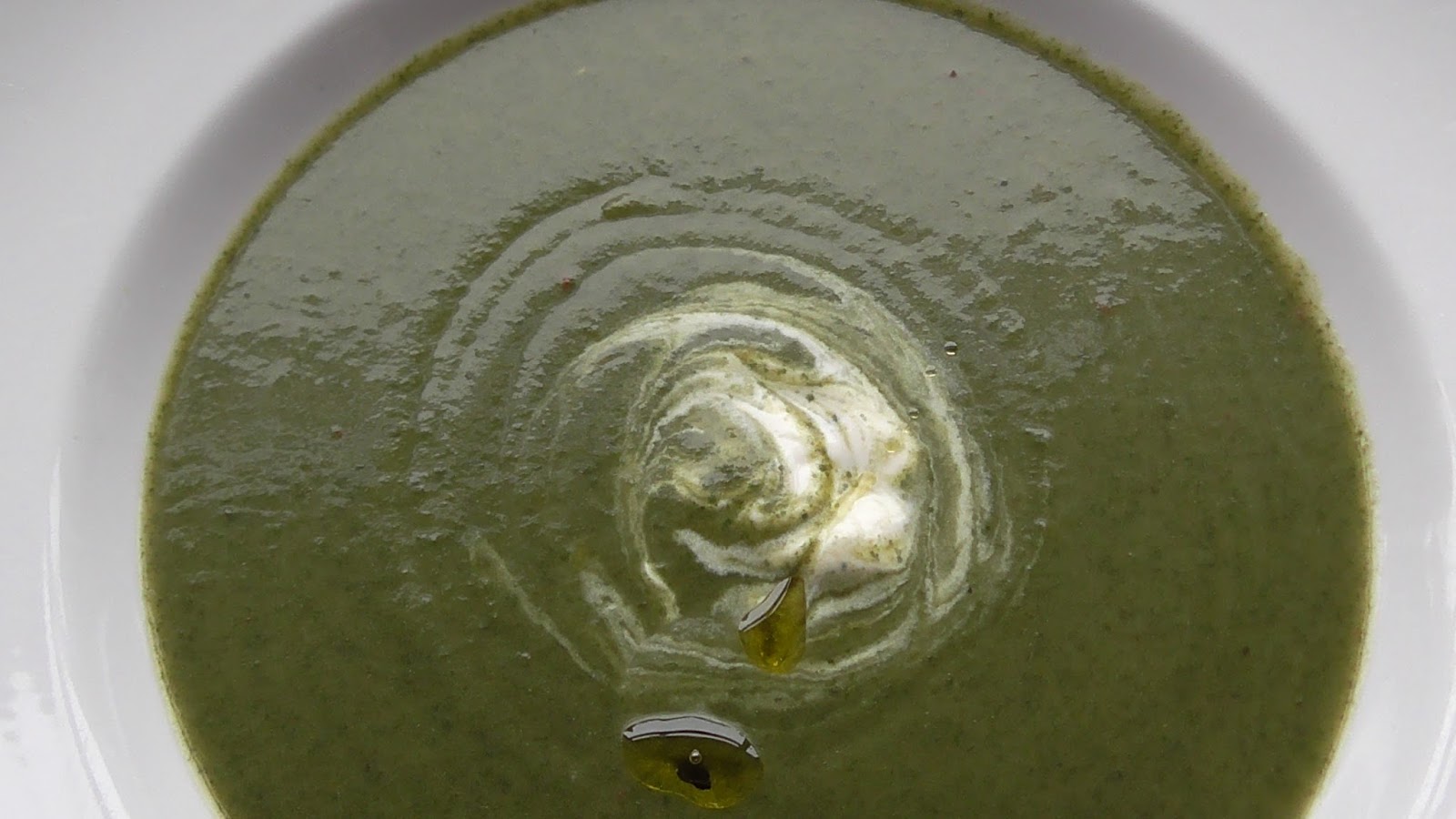
Fig. 1. L. Moore Spicy Green Nettle Soup 

Fig.2. L. Moore A detail of Spicy Green Nettle Soup 

Fig.3. L.Moore. Ready to Eat Spicy Green Nettle Soup ... Yum!


Ingredients (for about 4 people ... though we had it between us)

1 tbs butter (or coconut oil)
1 nearly full carrier bag of nettles
1 large onion
1 large carrot
1 large potato
Parmesan cheese for grating
A half to a litre of vegetable stock (or chicken). The amount depends on how thick you like your soup so I add half and then top up until I have the desired thickness
Season with salt and pepper
3 small dried red chillies (optional as we love chillies)
3 cloves of garlic (optional as we love garlic)
Creme fraiche
Olive oil

Method

Wash your nettles in a sink of tepid water (wear gloves) and then put in colander and rinse again
Melt butter/coconut oil in a large pan
Add your finely chopped onions and garlic and chillies and cook until nice and soft
Add your chopped carrots and potato and stir. Then add half a litre of stock and simmer with lid on for ten mins.
Then add your nettles and simmer with lid on for 5 or 10 mins until vegetables are just soft.
See if you need more stock and if you do add more and stir. When ready turn off the heat.
Then blitz with a blender until smooth
Add seasoning
Pour into your lovely bowls and add some creme fraiche, and top with  grated Parmesan and a glug of olive oil.

Hey presto slurp it down with a good home made bread ... yum.


Some information on nettles

The stinging nettle is a course upright perennial, covered in fine hairs and their leaves are toothed and heart shaped. They are packed with high levels of vitamin A and C, and also contain iron and protein. The dead nettle is very similar to stinging only they don't sting when touched. Their leaves are in pairs, triangular , pointed and coarsely toothed.

Sources
https://www.rivercottage.net/recipes/nettle-soup
Richard Mabey (2012) Food For Free Harper Collins Publishers, London. p, 63 &104


Nettle & Jack (garlic mustard) Salsa Verde

Nettle & Jack (garlic mustard) Salsa Verde

Wow what a way to use your fresh foraged wild green weeds than to make a salsa verde. This certainly does live up to it's name (green sauce). This is packed with a punch of vitamins. When I was eating this I felt like I was taken back in time during my ancestral period but without the trimmings. The colour takes your breath away ... it is very dense and moss like. "Stinging nettles are one of the best plants for human health, both as food and medicine ... a complete, ready-packaged natural vitamin and mineral supplement" (Bruton - Seal J & Seal, M, 2008, p 114). We can find stinging nettles everywhere in out hedgerows packed with protein, calcium, vitamin c, beta-carotene and chlorophyll.

Jack by the hedge known as garlic mustard or (Alliaria petiolata) is found in shady hedgerows and woodland edges and it contains glucosinolates and apigenin flavonoids, both known to have anti-tumour effects and high in vitamin A. "The leaves also contain cancer preventing chemicals typical of both garlics (allyl sulphides) and mustards (isothiocyanates)" (Irving, M. 2009, p 77).

So no wonder this green sauce is such a winner. I would experiment with this recipe as I have based it on my own palette where I like a lot of garlic and chilli and the anchovies add a strong salty taste. I made this to go with my salmon steak with a wild mushroom risotto. You may decide to omit some ingredients and add more olive oil and make it more fluid. However I would always  recommend experimenting with my recipes to make them to your own liking. I see my recipes as a starting point to explore wild foods and alter them to your own taste buds. It is the sheer  'act' of gathering these wild weeds that makes this such a wonderful experience and journey of discovery.

Get yourself outdoors on a brisk January day and experience the thrill of looking, finding and exploring. It really is worth it. I forget myself when I am absorbed in looking for these weeds. I feel a real balance between mind and body in a state of complete absorption, it's a great feeling ... . so go and try it. As I have said in all my blogs 'if in doubt leave it out'.

When your new to foraging always make sure you know what you have and check it with diagrams and pictures and a number of sources (not just the internet) and having another pair of eyes to help you identify your find is always useful so bring someone with you. It is fun doing the research and when you feel sure always try a little first. Tasting small amounts is always wise just in case you don't agree with it. Remember you have never eaten these foods before.

Fig 1. L. Moore Nettle & Jack Salsa Verde 

Fig. 2. L. Moore. Nettles washed and ready for simmering

Fig.3. L.Moore. A detail of Salsa Verde topped with Jack leaf

                                      Fig.4. Salmon Fillet with Nettle/Jack Verde & wild mushroom risotto                          


Ingredients

Half a carrier bag of stinging nettle tops (or non stinging nettles)
1 cup of jack by the hedge
3-4 anchovies
6-8 cloves of garlic
2 tbs mascapone soft cheese
2 tbs (or handfuls) of pine nuts
2 tbs olive oil
2 small dried red chillies
1 tbs lime juice (or lemon)
salt and black pepper to taste


  • Wash the nettles in lukewarm water and salt and strain (then rinse again to get rid of the salt)
  • Boil the nettles for approx 3 mins until soft and then plunge them into ice cold water
  • When cool squeeze the water out of the nettles
  • Add the squeeded nettles into a bowl with all the other ingredients and blitz with a blender
  • Put into a nice bowl and add a glug of olive oil on top and serve


Ta dah its ready (it should keep in the fridge for a couple of days)

I really enjoyed mine with my salmon steak however it did feel a bit thick for me so next time I would add more olive oil and perhaps think about roasting my garlic in the oven first and then squeeze this sweet garlic into my Verde and then blitz. I will also be trying pure Jack by the hedge (garlic mustard) salsa verde... yum.

References

Bruton-Seal, J & Seal, M. (2008) Hedgerow Medicine: Harvest and Make Your Own Herbal Remedies, Merlin Unwin Books  Ltd, London. p, 114.
Irving, M. (2009) The Forager Handbook: A Guide To The Edible Plants Of Britain, Ebury Press Publishing, p, 77.