Showing posts with label Recipe. Show all posts

Friday, 2 September 2016

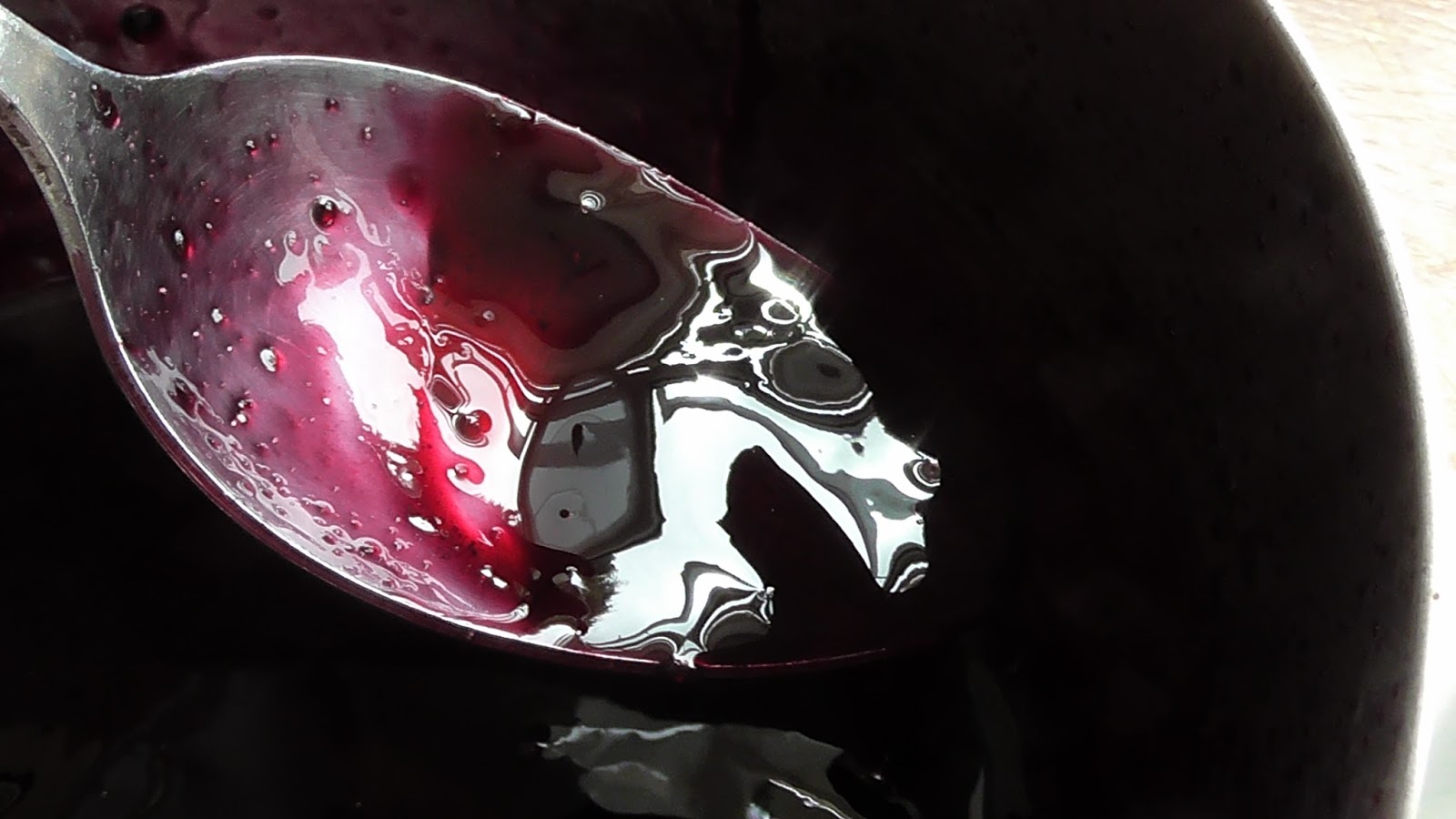
Vibrant Sumac, elderberry & blackberry juice

Vibrant Sumac Juice with Elderberries and Blackberries

Whoa...September already...

This is an amazing month/season for fruits , berries and nuts. This is a season for feasting on the goodies of the summer...yum...slurp. We have sumac berries, rowan berries, guelder rose berries, rose-hips, blackberries, plums, hazelnuts (the list is endless)
Fig 1.© L.Moore Vibrant Sumac Juice with blackberries and elderberries 
Now about the Stag horn Sumac. What a great name!

This is a garden escapee that comes from North America. Traditionally the native peoples of North America made a kind of lemonade with it (sometime known as the lemonade tree). The fruits taste of lemon and they are very tarty. You know when a sumac is ready to pick for such a wonderful drink when you touch it. When you press it with your fingers it feels rather sticky. If you lick your fingers you can taste the lemony bitterness of the fruits (be warned it is tarty).

Traditionally the fruits are soaked in water for several hours and then sieved and drank (my recipe uses a slightly different technique). The fruits have fine red hairs that can be dried and rubbed off as a dried herb called sumac. This is a red powder that comes from the dried fruits and it used a lot in Lebanese and Turkish Cuisine. You usually find Stag Horn's Sumac growing on roadsides, railways, embankments, and poor free-draining soils, and gardens. You need to gather the fruits at the beginning of autumn as the winter rain washes away the flavour.

The branch stems are really fuzzy and furry to touch and feel ever so gorgeous. They are supposed to resemble the antlers of a young stag. I have never felt the antlers of a stag but on first experience these velvety red branches feel really soothing. If I close my eyes I can imagine I am touching the antlers of an incerible stag (it's good to imagine...yay).


My Vibrant Sumac Juice with added blackberries and elderberries

5 - 6  sumac cones
sugar (amount depending on the stewed pulp)
Juice of l lemon (optional)
3 handfuls of blackberries
3 elderberry heads
1 liter of water

I placed my furry friends into a pan of water approximately about 1 liter of water and the juice of a lemon (optional). It is best to break up the cones with your hands before you begin to boil your Sumac. Once you have broken them up bring to the boil and simmer for about 10 to 15 minutes adding your elderberries and blackberries for the last 5 minutes. Apparently if you boil the berries a lot the tannin's come out and it tastes quite bitter and strong. Now mash up your fruits and leave to seep in the pan for half an hour (with the heat off). Then strain your pulp through a strainer or cloth and collect the juice into a bowl. Make sure you have the same amount of sugar to juice ratio (i.e the same amount as your extracted juice). Pour your juice back into a clean pan and then add your sugar. Gently heat up until the sugar dissolves and stir for a minute or two. Now it is ready to bottle. I did not sterilize my bottles because I knew I would be drinking it straight away. If you want to store this lovely juice I suggest you sterilize your bottles.

This really is a strange tasting juice (but it is gorgeous). It reminded me a lot of cranberry as it has a little dry after taste. As it is tarty and and dry I recommend tasting it first before you bottle it and decide if it needs more sugar and/or honey.  I had mine with ice and sparkling water added and a sprig of mint...delicious. If this recipe is a little strong for your taste buds try just seeping the berries in boiled water (off the heat) for 15 mins to get a weaker version and add your sugar while it is hot. I added the blackberries and the elderberries to give it a rich vibrant colour and also to reap the benefits of these dark fruits.

© Fig 2.L.Moore Sumac fruit shrub
© Fig.3.L.Moore Sumac juice from the Sumac berries with elderberries & blackberries

© Fig.4.L.Moore Sumac berry with elderberries
© Fig.5. L.Moore Sumac shrub in my neighbors garden

How to recognize the stag horn sumac 

Known as Rhus Typhina.
It is an upright suckering deciduous shrub which stand up to 3 m tall and wide. It has velvety red branches that resemble stags' horns. Large pinnate leaves up to 60 cm long and have 2-31 lance-shaped dark green leaflets that turn bright orange and red in autumn. The yellow/green flowers are produced on upright, conical shoots, up to 20 cm long in mid summer. Followed by female plants of dense clusters which are spherical, hairy and a deep crimson fruit on the tips of the branches (see pics).

Be Careful
Beware of the Rhus Verniciflua which is known as the varnish tree because of it's glossy leaves. It is very toxic and causes painful blisters and aggravates the skin. However this is different because the fruits are YELLOW.  Sumac is crimson red.


'If in doubt leave it out'

What to eat
You can eat the red berries and make a fruit drink. Also you can dry out the fruits and use these as a lemonade substitute (steep in boiled water for an hour or lightly simmer then sieve, pour back into pan adding sugar and simmer for 5 mins until sugar has dissolved). To dry the berries just break them up and keep dark and dry for a few weeks. You can also use the dried berries for jam but make sure you sieve the berries out before bottling the jam.

Once your berries have been dried out rub them through a nylon sieve to remove the red hairs and this is how you get your sumac herb. This is lovely rubbed into chicken as a marinade, added as a topping to hummus and yogurts.Sumac is also on eo f the main ingredients in the spice Za'atar (used in  middle eastern cuisine). Below are some links that may be of interest to health and food and also source material.

Ta da...enjoy this lovely fruit freely

Source material

Fowler, Alys (2011) The Thrifty Forager, pp160-161

http://www.healwithfood.org/health-benefits/sumac-spice-good-for-you.php

http://www.thekitchn.com/inside-the-spice-cabinet-sumac-67042


Thursday, 21 July 2016

Rich Mahonia Syrup

Rich Mahonia Syrup

Not only does this look good IT IS GOOD!


© Fig 1.L.Moore. Rich Mahonia Syrup with yogurt and fresh fruit

What can I say? When I first came across these dark rich tiny black beauties I thought 'woah...I bet they are dangerous'. I'm guessing there are millions who also thought the same. Good news my friend these little gems are indeed edible. Don't get me wrong they pack a seriously bitter punch to your tongue but they are worth the effort. Because of their bitterness they are understood as a 'bitter' which is, I believe, very good for the liver as it help the body secret fluids through triggering the bile ducts so no wonder it's used as a detox for the body.

This Oregon Grape known as Mahonia aquifolium is found throughout England in hedges, woods, gardens, parks and other public places. I came across these a few gardens down from where I live. I was walking by the said house while the occupants were doing a bit of gardening. I asked them what the plant was called and ran home and did my research. I ran back the next day and pleaded for some of their berries. There was a look of bewilderment because the owners of the plant had always assumed the berries were poisonous. 'Nope I said with pride...they are definitely edible'. I explained how bitter the are and how sugar is a must for cooking. I was up against the clock because the birds had had a field day on them over the past 24 hours.  

I had anticipated a few jars of jelly or jam but the birds beat me to it...the beloved plant was near bald when I got there. I know...I know...there is plenty for everyone and we all need to share with our little feathered friends. What is fab is now I know them I see them everywhere. The berries are about from June onwards. Right now though I can't find a shrub with any fruits on so you need to be quick.

Anyway here is my amazing Rich Mahonia Syrup made from the ripe fruits.

Rich Mahonia Syrup
A bowl of fruits
about half a pound of sugar (taste as you go)
squeeze of a little lemon juice
Cover your berries with about 2 mugs of water (just covering)
Potato masher

Method

I washed my berries in cold water and placed them in a pan. Cover the fruits with about 2 mugs of water. Bring to the boil and simmer for about 10-15 mins until your water runs a rich purple. While it is simmering use your masher and mash up the berries to extract more juices. Now add your sugar (try adding a bit at a time until it is sweet enough) and keep stirring until the sugar dissolves. It should be quite sweet because you will only use a little at a time. If needed add a little more water so it is not too thick. Once you have added your sugar simmer for a further 5 or 10 mins but keep an eye on it so it does go like toffee. You want your mixture just very slightly thick while it is hot because when it cools down it will go thicker. If your not sure turn the heat off and wait until it cools to check the consistency of your syrup. If you cool it down this way you can always make it thicker by adding more sugar and warming it up again but the reverse is not possible. If it is too thick while it is hot it will cool down like toffee (who knows it may come in handy) so watch it well. When it cools down pour into a jar and place in the fridge and use when you need it.

This syrup is very diverse. I have used mine with yogurt and fresh fruit...yummy. Also it can be used with ice cream and cereals and/or your granola, added to stir fries and gravies...delicious. You could even add hot water to it and make it into a nice hot drink or you could cool your drink down and add some soda water to make a refreshing drink with some mint...Ta Dah.


© Fig 2.L.Moore The Oregon Grape Shrub 
© Fig.3.L.Moore Oregon Grape close up
© Fig 4.L.Moore Oregon Grape to scale with a coin 
© Fig 5.L.Moore. Syrup with yogurt and fruit
© Fig 6.L.Moore. Making Syrup in Pan
© Fig 7.L.Moore. Lovely glossy syrup
© Fig. 8. L.Moore Pouring syrup on fruit & yogurt...yum
This shrub is so versatile the leaves, the bark and roots are also used medicinally for a number of ailments. Berberine is a chemical constituent found in several different plants and it is one of the main ingredients that attracts herbalists to this shrub. There have been many claims that the Oregon Grape Root is good for including: lowering blood sugar levels, fights infections, skin infections, drains and detoxifies, an anti spasmodic, and other claims are the impact it has on the liver because it is understood to be a hepatic (herb for the liver). The berries are also packed with vitamin C.

Remember to forage responsibly and always be extra careful that you know 100% what it is you are about to eat. Check with friends and do your research and only try in small quantities first  "if in doubt leave it out". Check a variety of sources and do not always rely on the internet as a source of truth...make your own mind up. There will be other fruits about that are dangerous look a likes.

IN saying that don't be discouraged go and forage with a group of friends and enjoy the wonders of a new window to the world. Start with safe options like dandelions if your totally new to foraging...it's amazing.

Enjoy!

Description
A small evergreen shrub with dark green, spiny holly-like leaves and bright yellow flowers in dense clusters, which later produce blue fruit in clusters resembling bunches of small grapes. Flowers January-May; fruit ripe June onwards.

Disclaimer
The information in this post is not my expert opinion on herbal medicinal remedies and/or health claims. Everything I say about this plants medicinal properties are taken from a number of sources which you can access below.

Source material

Irving, Miles (2009) The Forager Handbook:A guide To The Edible Plants Of Britain, Ebury Press, p50.
http://www.herbalremediesadvice.org/oregon-grape-herb.html
http://www.peoplespharmacy.com/2005/10/18/oregon-grape/


Friday, 17 June 2016

Dandelion Roots with Thai Green Curry and Dandelion Tea

Dandelion Roots with Thai  Green Curry and a cup of Dandelion Leaf Tea


Who ever thought gardening would serve up a great a creation...well dandelions are hip!


© Fig 1.L.Moore Dandelion Roots 
© Fig 2.L.Moore Dandelion Roots
© Fig 3.L.Moore Washed Dandelion Roots
© Fig 4.L.Moore Washed Dandelion Roots
© Fig 5. Thai Green Curry with Dandelion Roots
I know it is probably hard to believe that I am no gardener. Though I love to forage gardening is not what floats my boat. However yesterday being a glorious sunny day I thought it was high time I did some gardening before it disappeared through the overgrowth. So I started plucking weeds and other unknowns from my garden where I got more than I bargained for.

I had so many edibles I didn't quite know what to do with them...hence dandelion roots with my Thai Green Curry...yum. I had so many dandelions I felt guilty dumping them. So because I had been on the wine the night before I made a dandelion tea which is apparently amazing for the liver (especially if you have had a night on the booze).Yep it gets the liver juices going and looks after it...hooray to dandelions they are so dammed good for you. A word of warning with dandelion tea it is rather  bitter so it is best to dilute it a bit and have it with a good spoon of honey. The last time I had dandelion roots was in the winter when they were big and fat.

Dandelion Tea
As much dandelion leaves as you like (fill half a pan) washed and drained
Cover with water
Simmer for about 15 mins until the water turns a good green colour

© Fig 6.L Moore Dandelion Leaf Tea
You can dilute it down like a cordial and add hot water and honey to make a mild tea or use it straight from the pan so it is dark green and pungent with honey (use a tea strainer to get a clear tea). You can even have this cold with soda water and honey (put the honey in the warm water first and then wait until it cools and place in the fridge). It does make a refreshing drink and it is good for you. Dandelions are packed with vitamins (K,A,C,E), minerals (Calcium, Manganese, Iron, Potassium)  and nutrients (fiber, protein, carbohydrates). One thing about dandelion is that is does not strip the body of potassium.

So back to my meal.

It's such a treat when your dinner is shaped by good old weeds from the garden. Now that's magic! I chose the largest dandelions to uproot and eat. If your dandelions are quite small believe me it is not worth the labor of peeling these knobbly little edibles (not unless you have all day). When digging up the dandelions be careful not to break the roots. Dig the surrounding area around your plant as these roots can go quite deep. Gently pull it up and twist off the root with your hands. Then wash the roots in warm water and then begin to scrape them with a small knife and/or scouring pad. When they are nice and clean and white chop them up and they are ready to stir fry.

Stir fried dandelion roots
1 tbs coconut oil in a wok
A couple of handfuls of dandelion roots
2 cloves of garlic

Get your wok good (with your coconut oil) and hot and then add your dandelion roots stirring quickly for about 3 minutes then add your garlic for a further 1 minute and your done. I took these out the pan and then made my Thai Green Curry and then added the dandelion roots later to the curry and it was lovely. I did try the dandelion roots raw and they were a bit bitter. I think dandelion roots taste better in the winter before the plant flowers because the roots are fuller and fatter and less bitter. During the winter I boiled the roots and had them with butter and they were delicious. The roots have more medicinal properties in them in the winter and are sweeter. However for this time of year it is a great way to use them up..yum.

Thai Green Curry
3 lime leaves
1 tbs thai green curry paste
1 tbs coconut oil
1 bunch fresh coriander
2 hand fulls of dandelion roots (previously stir fried)
1 handful of frozen peas and any other vegetables you fancy (I used broccoli)
1 tin of coconut milk
2-3 fresh chicken breasts

I usually make my own curry paste.

My thai green curry was not planned (I was coerced into making it with an abundance of dandelions LOL) so I used some thai green curry paste instead which was also good. In my opinion there is only one ready made high street brand that I think is worth using and that's 'Mae Ploy'. SO heat your wok up so it's nice and hot then add you coconut oil then your curry paste. Give it a good stir and fry it off then add your coconut milk slowly and lower the heat. Give that a good stir and now add your lime leaves, chopped coriander root and diced chicken breasts and simmer for about 20-30 mins on low. Halfway through I added my dandelion roots to soften a bit more. Lastly I added the last of my coriander leaves and served with some basmati rice...slurp...gulp...yum.

Then (I know it's not sexy) I had a cup of dandelion tea afterwards. What a dinner... thank you dandelions! I will keep the tea in my fridge and have it daily with some honey.

Below is some useful information on dandelion. The roots can also be dried and powdered for medicinal uses. In the British Herbal Pharmacopoeia 1990 volume 1 (pg 38-39) dandelion root is understood as a hepatic stimulant i.e. it is a liver stimulant. You can also make tea with dandelion roots and there are so many health benefits from dandelions and lots more!

British Herbal Pharmacopoeia (1990) Volume 1, published by the British Herbal Medicine Association 
https://www.organicfacts.net/health-benefits/herbs-and-spices/health-benefits-of-dandelion.html 
http://www.anniesremedy.com/herb_detail92.php


Sunday, 12 June 2016

Ocean Sea Beet with Parmesan Cheese and Greens

Ocean Sea Beet with Parmesan Cheese and Greens

While I was on my holiday enjoying the delight of foraging outside my familiar neighborhood I was amazed at what I could find in this part of out little Island. I'd been to Devon and I found some amazing edibles on the beach. While I was taking a stroll along the beach and thinking about the world... as you do I came across a great find of greens. As usual I had my pocket guide of wild edibles with me and my camera and a few paper bags. The weather was lovely and I was somewhere else with my thoughts. I had my toes in the sea water and I found a tiny little beach all to myself. Oh to have your own bit of beach to yourself is a wonder in-itself...no dogs, no people just me and the ocean...ah such a delight.

© L.Moore. Fig.1. Collected Sea Beet
I was listening to the water and looking around and breathing in the sea air and doing a bit of breathing exercises (breath in for 6 breath out for 8 etc). I felt the salty air up my nostrils and I was so chilled. I laid on a rock and just wandered off into complete calm. After a while I continued on my walk and came across a whole load of sea beet..oh yes there it was green, shiny and welcoming...what a prized find yay.

So I bagged a handful and scurried on up to the rented holiday home and did my research. Bingo! yes indeed it was sea beet..Ta Dah to another amazing day. The texture of this lovely leaf is thick and rubbery and you would imagine it tasted rather tough. On the contrary it's amazing.
© L.Moore. Fig 2. Collect your Sea Beet 
© L.Moore. Fig 3. Sea Beet by the sea
© L.Moore. Fig 4 Sea Beet with parmesan cheese and greens
© L.Moore. Fig 5. Empty dish speaks volumes (first cooked on holiday)
© L.Moore. Fig 6. Collect your Sea Beet (responsibly) on cliff side


Ingredients
4/5 handfuls of sea beet (treat as spinach i.e a lot gives you a little)
1 green pepper
2 tbs cream cheese
4 cloves of garlic
1 lemon
Parmesan cheese for grating on top
Butter for frying (or an oil of your choice i.e olive oil/coconut etc.)

Wash you sea beet and pat dry. In a frying pan melt your butter and gently fry your garlic. Add your sea beet and pepper and fry for about 10 minutes until sea beet is soft. Add your cream cheese and lemon juice and stir. In a warm ovenproof dish add your sea beet and grate on top with parmesan. Place under the grill for a minute and serve. Ta Dah... delicious.

Get out looking for this incredible edible...I promise you won't be disappointed.

As usual my disclaimer is that 'it is not my responsibility if you don't pick the right edible'. Please be 100% certain it is what it should be. If in doubt leave it out. Some of my posts will give you source material to do your research and point you in some interesting directions and some do not. It all depends how much time I have when I am writing.

But please enjoy! It is great fun.


Monday, 30 May 2016

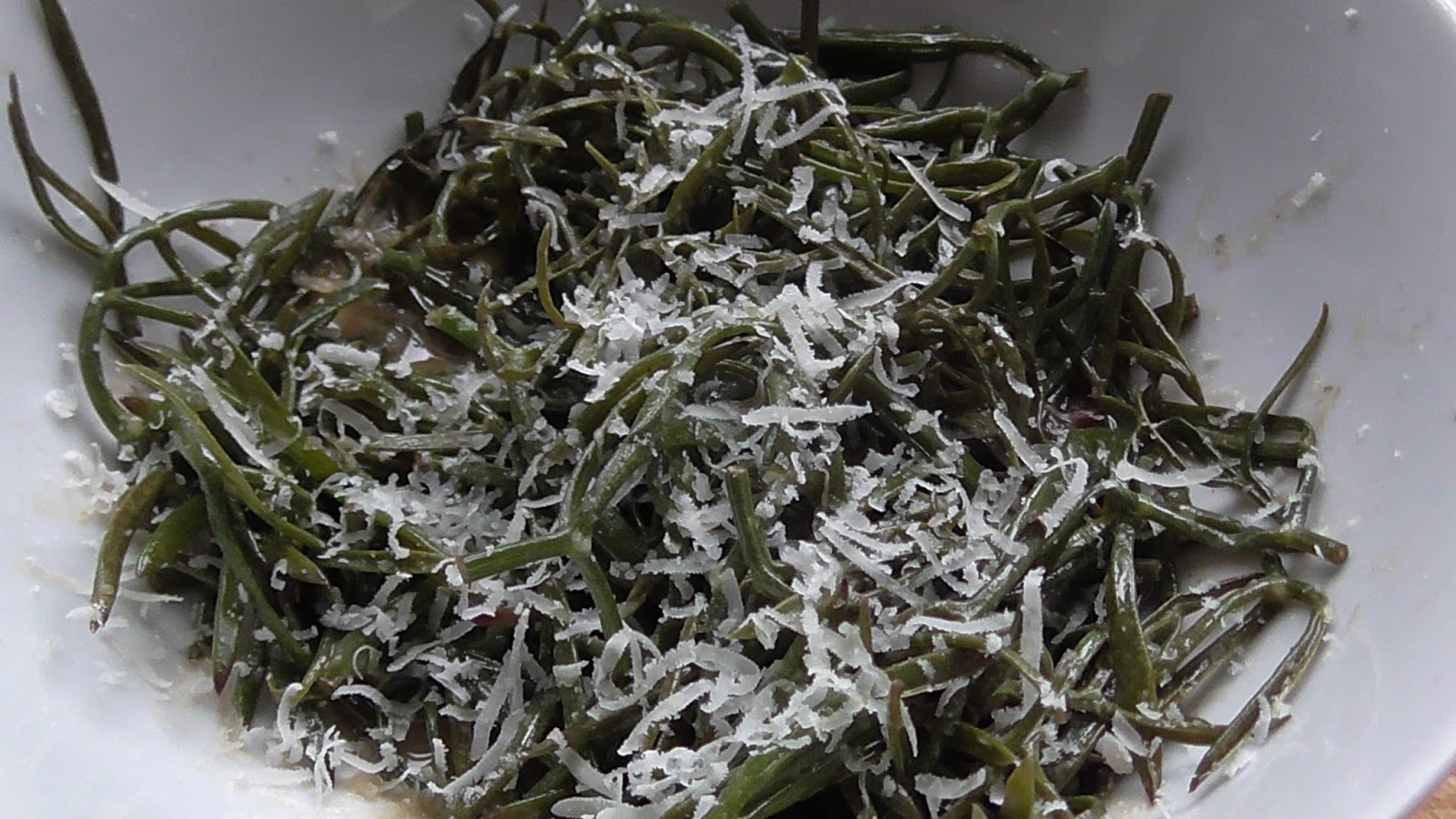
Lemon Rock Samphire with parmesan cheese

Lemon Rock Samphire with Parmesan Cheese


Well what can I say about this crazy abundant edible?

It's Absolutely marvelous


© L.Moore Fig 1. Lemon Rock Samphire with Parmesan
© L.Moore. Fig.2 Rock Samphire Just collected from rock face
© L.Moore. Fig.3. Rock Samphire on cliff face
© L.Moore. Fig.4. Rock Samphire in context on rock face
© L.Moore. Fig 5. Lemon Rock Samphire with Cheese
© L.Moore. Fig 6. Empty dish speaks volumes (my first trial of samphire cooked on holiday) 
© L.Moore fig. 7. At home with salmon
I went on a family holiday to Devon and found this extraordinary edible on the cliff face within easy reach of little old me. This was a very lucky find because usually rock samphire can be incredibly difficult to get on a cliff face. As soon as I saw it I knew immediately what it was. I bagged a handful and went back to our holiday house and did my research on it. It was indeed rock samphire. I had never tasted rock samphire before. I had tasted marsh samphire from certain supermarkets but I have never seen this wonder. I tried it raw first (when I was 100% certain what it was) as a little nibble and thought 'wow that's different'. I can't find the words to explain how it tastes but my interpretation of it reminds me of a celeriac. NO one else agrees with me of course so don't take my opinion literally. You will have to try it yourself. A lot of recipes suggest pickling it and I can see why. I imagine it would pickle really well. So as per usual I wanted to experiment with it...and hey presto here is my little recipe which I thought was yummy.  


4 big handfuls of rock samphire
4 cloves of garlic
2 tbs butter (or oil of your choice i.e coconut etc.)
1 lemon
2 tbs cream cheese (optional)
Parmesan for grating on top

In a pan steam your rock samphire for about 10 minutes and drain off as much water as you can. Then in a frying pan add your butter and lightly fry your garlic and then add your samphire and the juice of half to a full lemon. Fry for about 5 minutes and then add your cream cheese and stir in. Put your samphire in a warm ovenproof dish and then grate your parmesan cheese on top. Place under the grill for a few minutes and serve. I had mine with salmon and mint potatotoes and I have also had it in a warm salad with chicken and with pasta. Experiment with your adorable find. I can assure you it quite an extraordinary taste that will tickle those taste-buds..delicious.

I was lucky enough to bring some home and I put in the fridge for a week and it was still amazing. My partner delighted me by making me a chicken ballotine wrapped in garden herbs and parmesan cheese served with lemon samphire (without the cheese and steaming ...he fried it in garlic butter and lemon juice yum yum). Ah this is the life eating and exploring new edibles...what more does a woman want. If you have tried it and come up with innovate ways of using it then please let me know I would love to hear from you.

As usual please gather responsibly. I only take what I need and I always pick from a number of plants to ensure the plant thrives. Again 'if in doubt then leave it out'. I claim no responsibility for your identification of your wild foods. Be sure to try a tiny amount to see if it agrees with you. Below are some useful sites to help you identify rock samphire, recipes and other useful information.

http://www.recipes4us.co.uk/Rock_Samphire.htm
http://www.gallowaywildfoods.com/rock-samphire-identification-edibility-distribution/


Wednesday, 6 April 2016

Jack by the hedge pesto with cream cheese

Jack pesto with cream cheese


It's free...it's delicious...and it is everywhere at the moment.

© Fig.1.L.Moore 'Jack by the hedge pesto with cream cheese'
This is so versatile and can be used in a number of ways. It can be used in pasta to turn the ordinary into extraordinary.You can put it on toast with some cheese...yum, it can be added to a pot of lovely new potatoes, plonked on a cracker, added to your favorite sandwich and more. I love Jack by the hedge (or commonly called garlic mustard). Next time you go walking have a look around. At the moment there is a lot of it about and it is quite easy to recognize. If you think you have spotted crush the leaves between your fingers. You can't mistake the lovely garlic/mustard smell. Of course if in doubt then leave it out.

You will find this garlic mustard in field margins, road verges, hedges, river and stream banks, edges of woods and ditches. This is a native biennial. First year growth have long stalked cordate (heart shaped) leaves with regular saw-like teeth and a crinkly looking network of veins. The main stem that appears in the spring of the second year has paler green nettle like leaves. It grows tall and thin like nettles. The leaves have the distinct smell of garlic when crushed. Small white flowers (6 mm wide) appear in clusters from mid April;seed pods are long, up to 60 mm, and 2 - 3 mm thick curving out from the stem.

It is a slightly bitter plant and needs to be mixed with ingredients that accompany such as fatty meats and salt fish. However I love it mixed with a number of ingredients such as goats cheese and nettle pasta or pirogi, and/or mushroom and salmon pirogi...yum. My Polish friend taught me how to make pirogi and it's stunning in a lot of my recipes.

You can eat the leaves sparingly in salads and sandwiches, add to risottos and the flowers are also a delightful ingredient in garnishes salads. This is one of my favorite free wild edibles which you can't get in a supermarket. I have used the roots grated which is amazing and similar to horseradish mixed with yogurt and served with beef.You can even use the green seed pods as spices and use as you would as mustard seeds.

Get out and find Jack...you will be amazed and so proud of your find. Share the love with this stunning wild edible. When I first came across 'Jack' I can't tell you how liberating it was. I was taking a walk one day along a common pathway I use everyday. I looked down and thought 'that looks like Jack'. I gave it a crush between my fingers and got the unmistakable whiff. OMG I could not believe my luck. It was one of my first finds and I wanted to share it with the world. Yep I nearly shoved it up a strangers nose but I contained my excitement and shared it with my partners nose instead when I got home. Now I see it everywhere and I am sharing it with you.

If you have any 'Jack' recipes to share then please contact me I would love to hear about your experiments.

Jack pesto with cream cheese

1 handful of lightly toasted pine nuts
3 handfuls of Jack
3 cloves of garlic
1 handful of grated parmesan cheese
a few glugs of olive oil (to your taste and consistency)
black pepper
salt to taste
2 tbs lime juice
2-3 tablespoons of Philadelphia cheese (or any of your choice)

Place all ingredients into a bowl and blitz with your hand held blender or machine. It will keep longer in the fridge if you pour some olive oil over the top of it. Enjoy this with anything or as you would any pesto. I tried mine with pirogi filled with goats cheese and nettles and smoked salmon and mushroom pirogi. The photographs you see are taken when I tried this pesto with roasted butternut squash. For me the squash was too sweet with Jack but as with all my recipes you can experiment with this strong flavored pesto.

© Fig.2.L.Moore close up of Jack by the hedge
© Fig.3. L.Moore 'Jack pesto'
© Fig.4. L.Moore Pirogi with jack pesto  
 Source
Irving, M. (2009) The Forager Handbook: A Guide to the Edible Plants of Britain, Ebury Press,  pp, 76-77

© Fig.5. L.Moore an young Jack to scale with a ten pence piece